


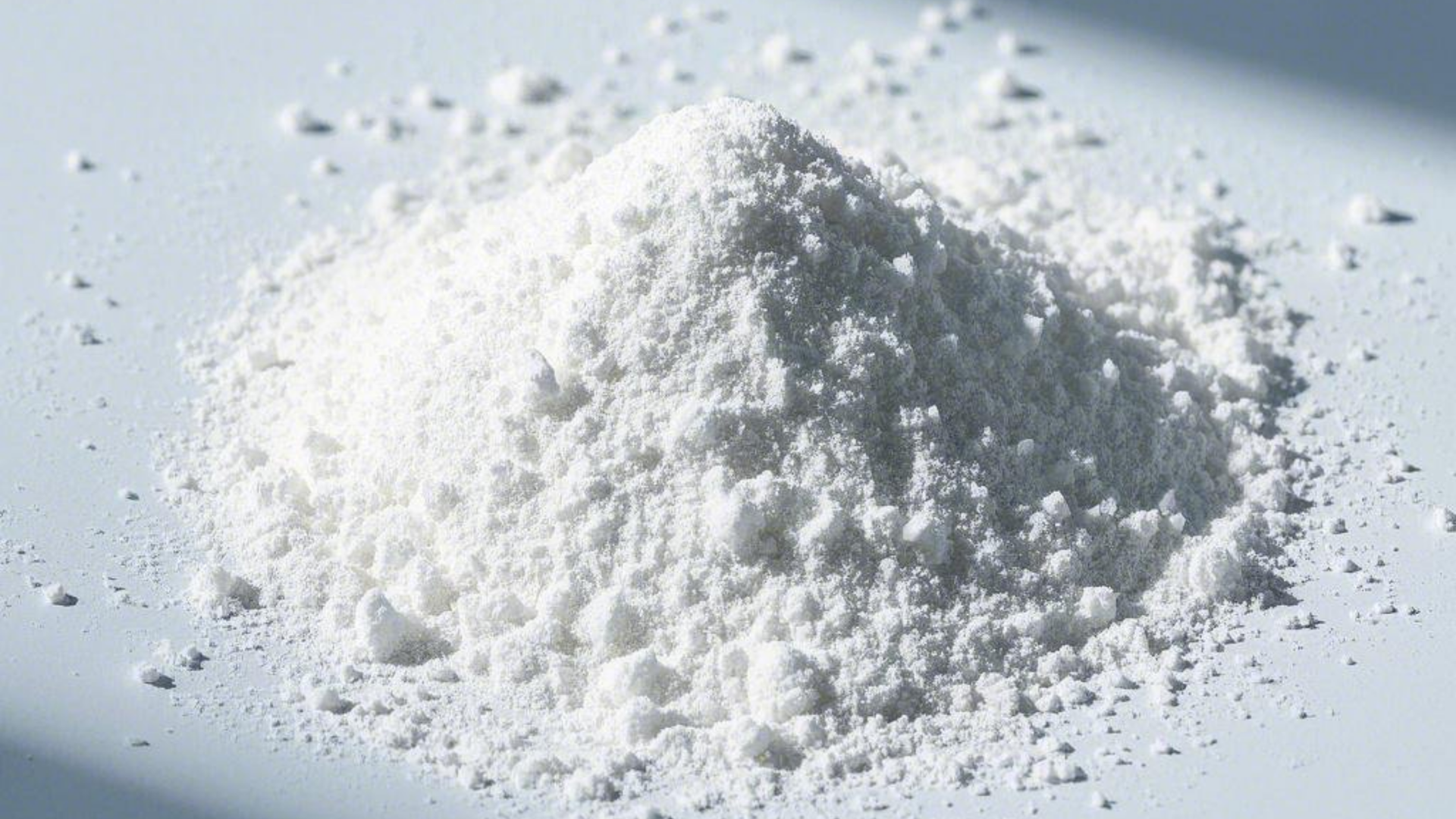
Calcium carbonate powder (CaCO₃), also known as calcium carbonate, is an important additive widely used in the plastics industry. By improving the mechanical properties, durability, and rigidity of plastic products, CaCO₃ calcium carbonate powder is commonly used as a key component in the production of filler masterbatch. This article explores the key properties and roles of CaCO₃ calcium carbonate powder in the plastics industry.
Contents
- 1 The Role of CaCO₃ Calcium Carbonate Powder in the Plastics Industry
- 2 What Are the Sources of CaCO₃ Used as a Plastic Additive?
- 3 Key Properties of CaCO₃ as a Plastic Additive
- 4 How Is CaCO₃ Used as a Plastic Additive Classified?
- 5 What Role Does Calcium Carbonate Powder Play When Used as a Plastic Additive?
- 6 Conclusion
The Role of CaCO₃ Calcium Carbonate Powder in the Plastics Industry
CaCO₃ calcium carbonate powder plays a vital role in the plastics industry. It is not simply used as a filler but also provides a range of practical benefits:
- Reduce production costs: Compared with virgin plastic resin, calcium carbonate is significantly more cost effective. Using CaCO₃ as a filler can substantially reduce raw material costs, lower the overall product cost, and improve competitiveness in the market.
- Increase rigidity and impact resistance: CaCO₃ can improve the rigidity, tensile strength, and impact resistance of plastic products.
- Improve surface gloss: When CaCO₃ with an appropriate particle size is used, it can help create a smoother and more aesthetically appealing surface.
- Enhance printability: Plastic surfaces containing CaCO₃ can provide better ink adhesion, making printing easier and helping produce sharper, clearer printed images.
- Improve processability: CaCO₃ can help plastic materials flow more easily and fill molds more effectively during processing, potentially reducing production cycle times.
- Improve dimensional stability: CaCO₃ can reduce plastic shrinkage during cooling, helping finished products maintain more consistent dimensions.
- Improve flame resistance: In certain formulations and applications, CaCO₃ may contribute to improved flame resistance of plastic products.
What Are the Sources of CaCO₃ Used as a Plastic Additive?
CaCO₃ calcium carbonate powder is primarily obtained and produced from the following sources:
Natural limestone: This is the most common source of CaCO₃. Limestone is extracted from quarries and then finely ground into powder with different particle sizes according to specific application requirements.
Marble: Marble is another natural form of calcium carbonate and generally offers higher purity than conventional limestone. However, due to its higher cost, marble is less commonly used for producing calcium carbonate powder intended for plastic applications.
Seashells and oyster shells: These are biological sources of CaCO₃ that can offer an environmentally friendly alternative. However, their availability is relatively limited and production costs are generally higher.
Key Properties of CaCO₃ as a Plastic Additive
To meet the demanding requirements of the plastics industry, CaCO₃ used as a plastic additive should possess several important properties:
- High purity: The higher the CaCO₃ content, the more suitable the material is for many plastic applications. CaCO₃ additives for plastics typically have a purity of more than 98%.
- Fine and uniform particle size: Particle size directly affects the surface finish, mechanical performance, and processability of plastic products. Manufacturers typically supply calcium carbonate powder in various particle size ranges, from a few micrometers to several tens of micrometers, depending on the specific application.
- High whiteness: The whiteness of CaCO₃ affects the final color of plastic products, particularly products requiring bright or light-colored finishes.
- Low moisture content: Excessive moisture can cause defects and processing issues during plastic manufacturing.
- Low heavy metal content: To ensure product safety, the levels of heavy metals such as lead, cadmium, and mercury in CaCO₃ additives must be carefully controlled and maintained within applicable limits.
- Good dispersion in plastics: Uniform dispersion within the polymer matrix is essential for achieving consistent properties and stable product quality.
How Is CaCO₃ Used as a Plastic Additive Classified?
CaCO₃ plastic additives can be classified according to various criteria, with particle size and surface treatment being two of the most common.
By Particle Size
- Coarse CaCO₃: Features larger particles and is generally used in applications where high fineness is not a critical requirement.
- Fine CaCO₃: Has smaller particles and is suitable for products requiring a smoother surface and higher gloss.
- Ultrafine CaCO₃: Features extremely small particles, often below 1 micrometer, and is typically used in specialized applications requiring very high fineness and excellent dispersion.
By Surface Treatment
- Uncoated CaCO₃: This is conventional calcium carbonate powder that has not undergone surface treatment.
- Coated CaCO₃: The surface of CaCO₃ particles is treated with a coating agent, commonly stearic acid, to improve dispersion in plastics, enhance compatibility with the polymer matrix, and optimize certain product properties.
What Role Does Calcium Carbonate Powder Play When Used as a Plastic Additive?
As mentioned above, calcium carbonate powder serves several important functions when used as a plastic additive. These roles can be summarized as follows:
Filler: CaCO₃ Filler Masterbatch is a concentrated mixture of calcium carbonate powder, typically surface treated, combined with a polymer carrier such as PE, PP, or PS and other additives. Since virgin polymer resin used in plastic manufacturing can be relatively expensive, manufacturers can use CaCO₃ Filler Masterbatch as a cost effective filler solution. This can help reduce production costs while maintaining important mechanical properties such as strength, rigidity, and good dispersion. It is particularly suitable for large scale plastic manufacturers seeking to optimize production costs.
Reinforcing agent: CaCO₃ can contribute to improved mechanical properties, including tensile strength, flexural strength, and impact resistance, depending on the formulation and application.
Surface modifier: It can help improve surface smoothness and gloss while supporting better printability.
Processing aid: CaCO₃ can contribute to improved material flow and mold filling, helping optimize processing efficiency and production cycle times.
Dimensional stabilizer: It can reduce shrinkage during cooling and improve dimensional stability in finished plastic products.
Conclusion
CaCO₃ calcium carbonate powder is an important additive in the plastics industry, offering a combination of functional and economic benefits. Depending on its purity, particle size, surface treatment, and formulation, it can contribute to improved mechanical properties, rigidity, surface quality, dimensional stability, and processing performance while helping manufacturers reduce production costs.
With its versatility and cost effectiveness, calcium carbonate powder has become an essential mineral additive for a wide range of plastic manufacturing applications. Selecting the appropriate CaCO₃ grade and ensuring consistent quality are key factors in achieving stable processing and optimal product performance.